
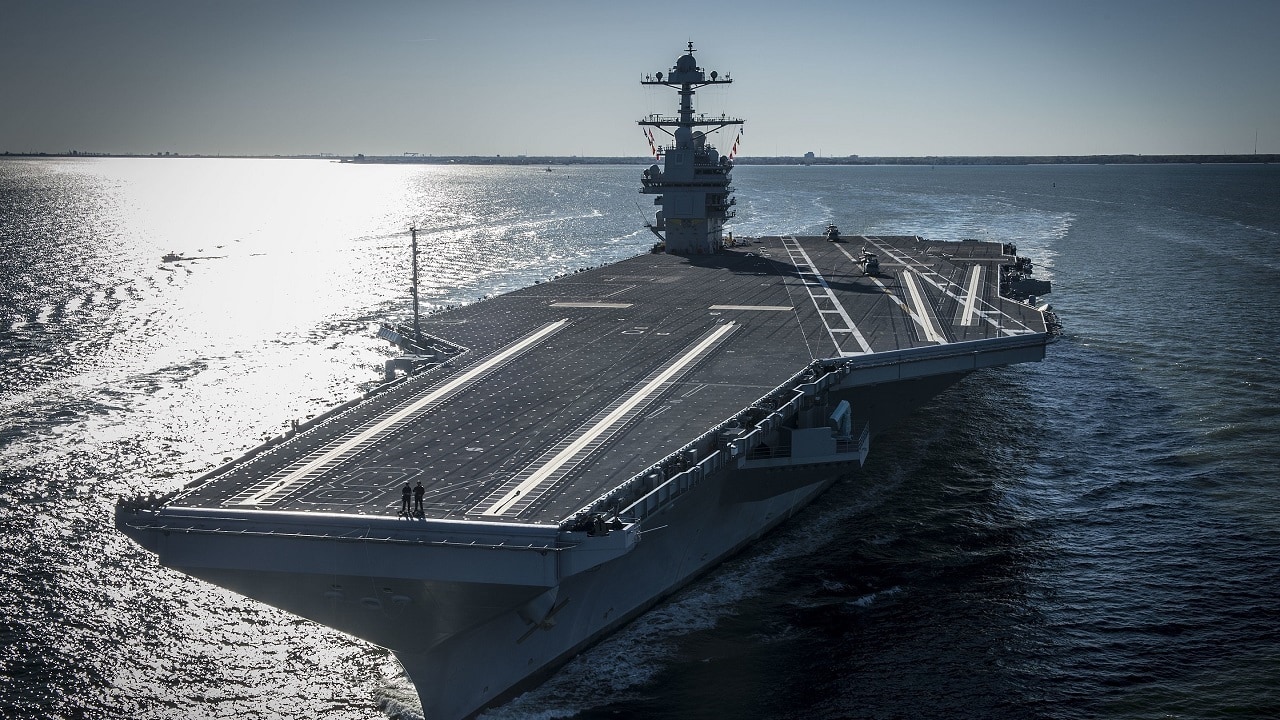
Key Points and Summary – China has reportedly begun building its first nuclear-powered aircraft carrier, the Type 004, at Dalian shipyard—a direct bid to match and potentially outsize US Ford-class supercarriers.
-Projected to displace 110,000–120,000 tons and carry more than 90 aircraft, including J-15T and J-35 fighters, the ship would be the largest warship ever built in Asia.
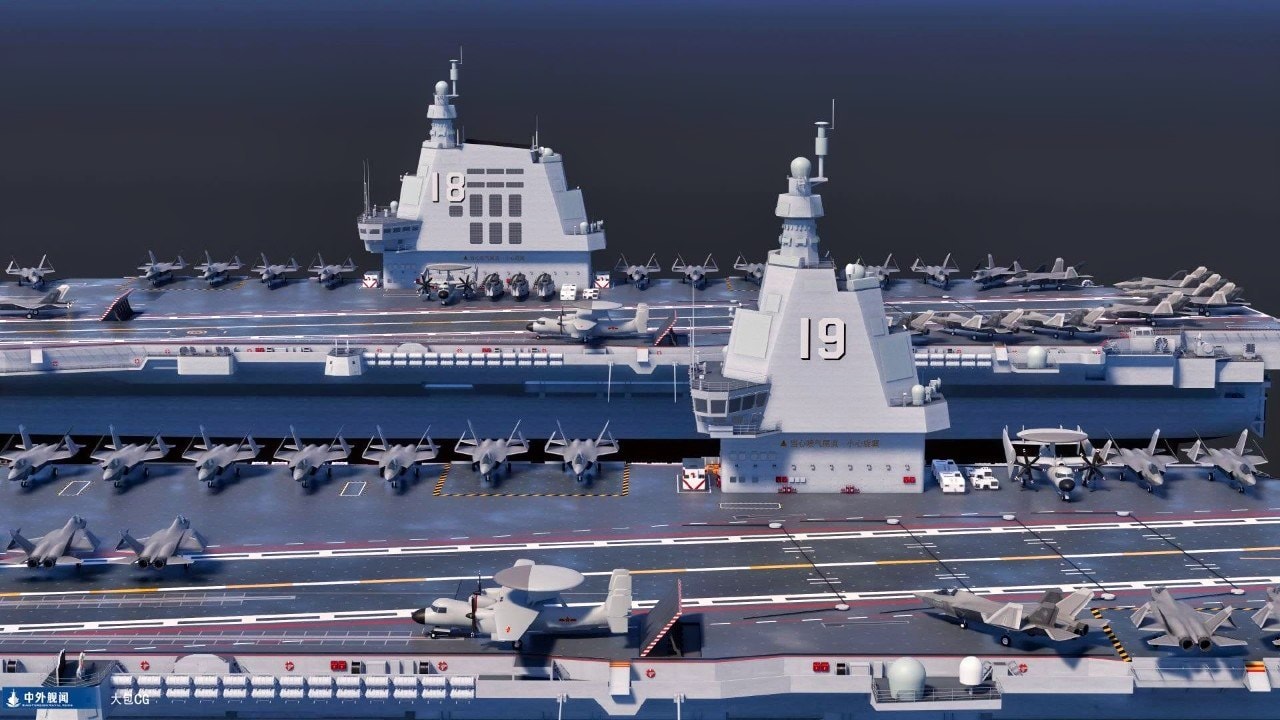
China Aircraft Carrier Models. Image Credit: Creative Commons.
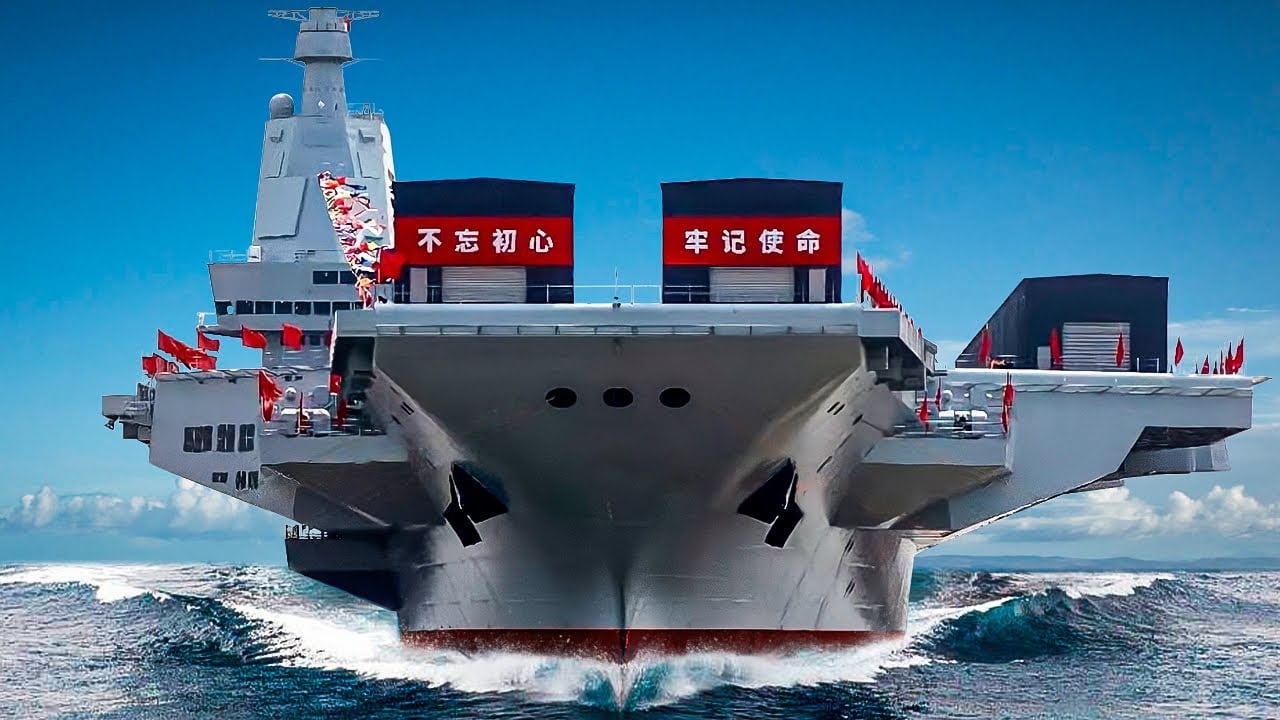
China Aircraft Carrier. Image Credit: YouTube Screenshot.
-Twin nuclear reactors, CATOBAR launch systems, and electromagnetic catapults could give Beijing true blue-water power projection for the first time.
-Expert Christian D. Orr walks through what’s known, what’s guesswork, and why China’s inexperience with nuclear carriers still looms as a significant constraint.
What Do We Know About China’s Nuclear-Powered Aircraft Carrier?
The USS Enterprise (CVN-65; affectionately nicknamed the “Big E” like her World War II predecessor [CV-6]) made history as (1) the world’s first nuclear-powered aircraft carrier, thus conferring major bragging rights to the United States Navy.
Today, the USN nuclear supercarrier tradition is proudly carried on by both the Nimitz-class and the successor Gerald R. Ford-class warships.
In this day & age of renewed Great Power competition, the People’s Republic of China (PRC) has displayed a knack for copycatting, er, emulating U.S. military technologies.
For example, initial artists’ renderings of their upcoming Xi’an H-20 6th Generation stealth bomber make it look like a pretty blatant ripoff of both the American Gen 6 Northrop Grumman B-21 Raider and the Raider’s Cold War-era predecessor, the Northrop B-2 Spirit.
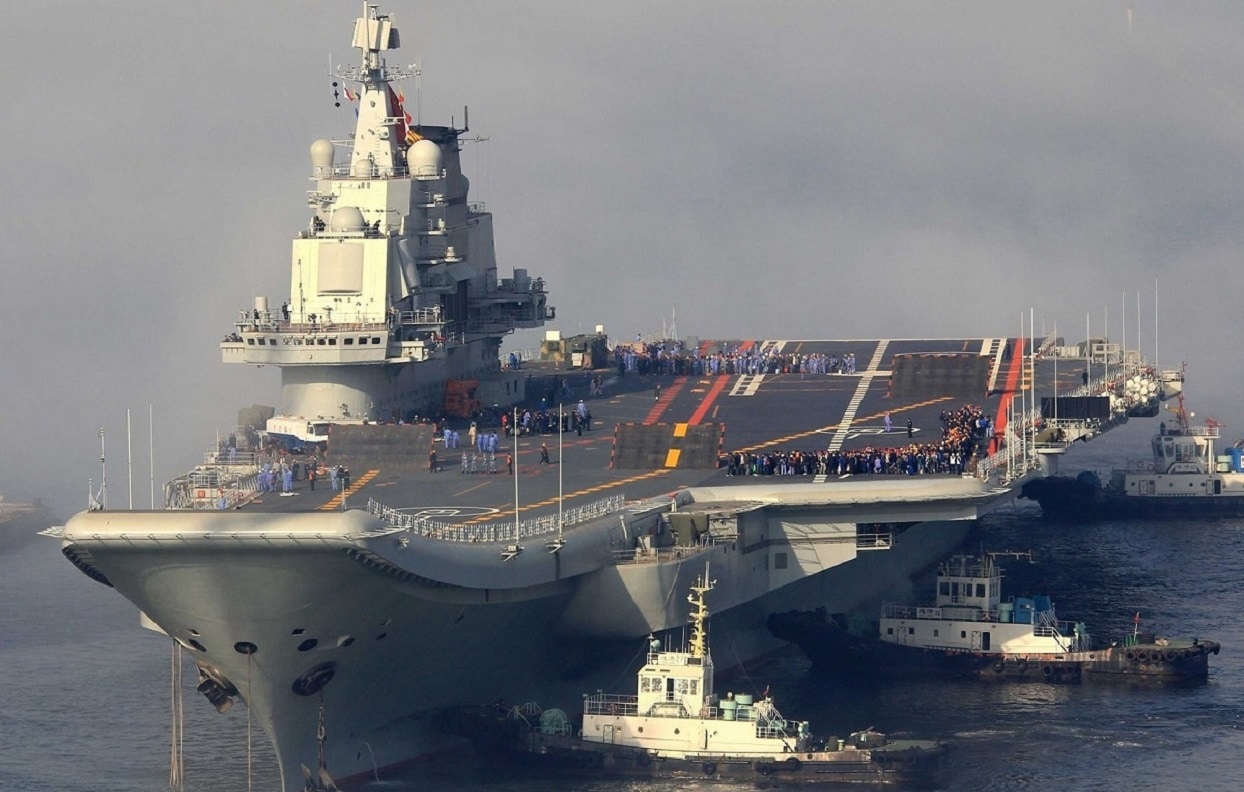
Chinese Aircraft Carrier. Image: Chinese Internet.
Well, not surprisingly, the PRC is now getting in on the nuke-powered “flattop” game.
So, what do we know about Beijing’s new nuke supercarrier thus far?
The Basics
The new supercarrier has been designated the Type 004, and Chinese military analysts confirmed on September 29, 2025, that construction of the warship has begun at the Dalian Shipyard.
According to the Army Recognition website (which, its service-specific moniker and interservice rivalries notwithstanding, also covers naval and aerial military technologies), the Type 004 will likely have the following features and tech specs:
-Twin pressurized water reactors, estimated to produce around 450 to 500 megawatts combined
-Modular assembly of hull sections and specialized electromagnetic catapult launch infrastructure
-Full-length CATOBAR (Catapult Assisted Take-Off But Arrested Recovery) flight deck and an expanded island superstructure
-A displacement between 110,000 and 120,000 tons, which, according to Defence Security Asia, “mak[es] it not only the largest warship ever built in Asia but potentially the largest in the world.” (For basis of comparison, the Ford-class displaces 100,000 tons.)
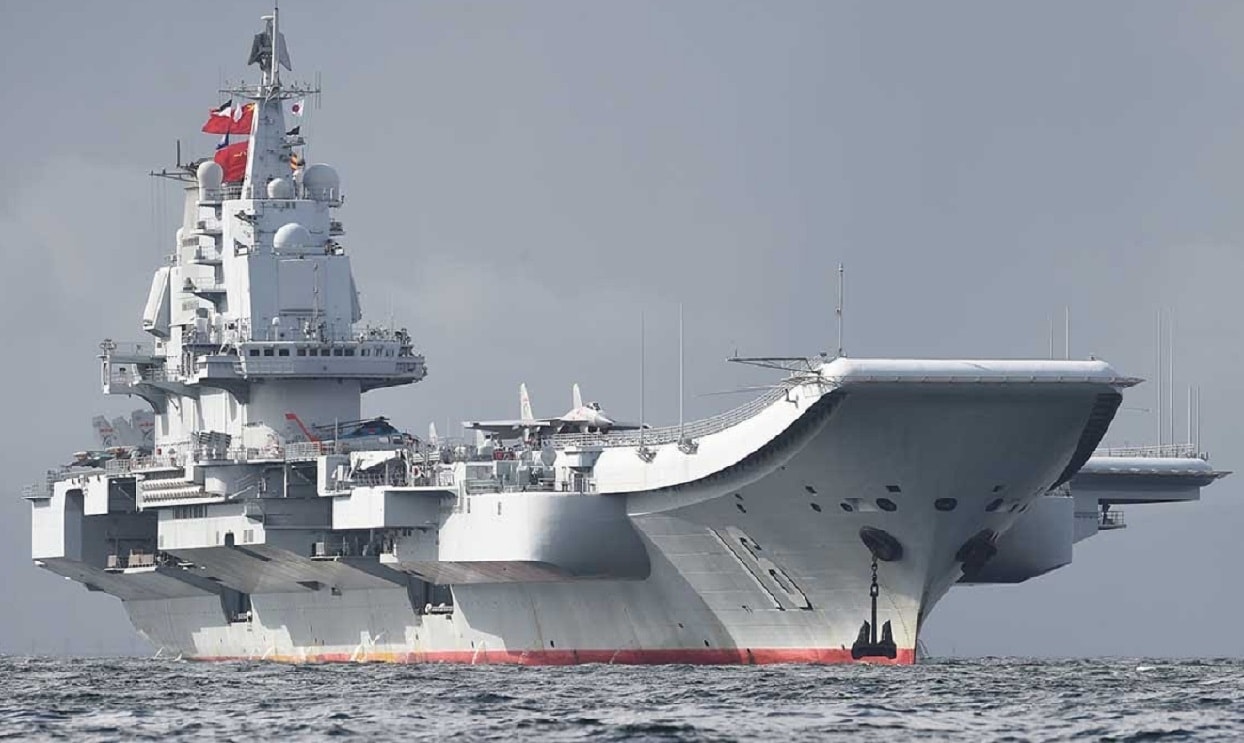
China Aircraft Carrier. Image: Creative Commons.
-Carrying capacity of more than 90 fixed-wing aircraft, including an expected mix of 24 to 30 J-15T catapult-launched heavy fighters and over 20 J-35 5th Generation stealth fighters; by contrast, the Fords’ air wing size is only 75 aircraft (including F-35C stealth fighters
In other words, not only is the Type 004 potentially the most potent manifestation of China’s efforts to challenge American power projection in the Indo-Pacific region, it also appears to be a serious effort on the PRC naval brass’s attempt to one-up the Ford-class warships in multiple dimensions.
To put it another way, the Chinese war planners evidently believe that “Size does matter.”
The Chinese Communist Party’s Current Carrier Composition (CCP-CCC)
The People’s Liberation Army Navy (PLAN; Zhōngguórénmínjiěfàngjūn Hǎijūn) currently has three operational flattops, namely the Kuznetsov-class Tye 001 carrier Liaoning (Pennant No. 16), the modified Kuznetsov-class Type 002 carrier Shandong (Pennant No. 17), and the Fujian-class Type 003 carrier Fujian (Pennant No. 18).
Commissioned in 2012, 2019, and 2025 respectively, these ships displace 60,900, 70,000, and 80,000+ tons (in other words, the newer they got, the bigger they got).
In addition to being the most newly commissioned carrier in the PLAN fleet, it’s also the first indigenously produced vessel of the bunch (as most of our savvy readers already know, the Kuznetsov-class is a Soviet-era design) as well as the first to sport an electromagnetic aircraft launch system.
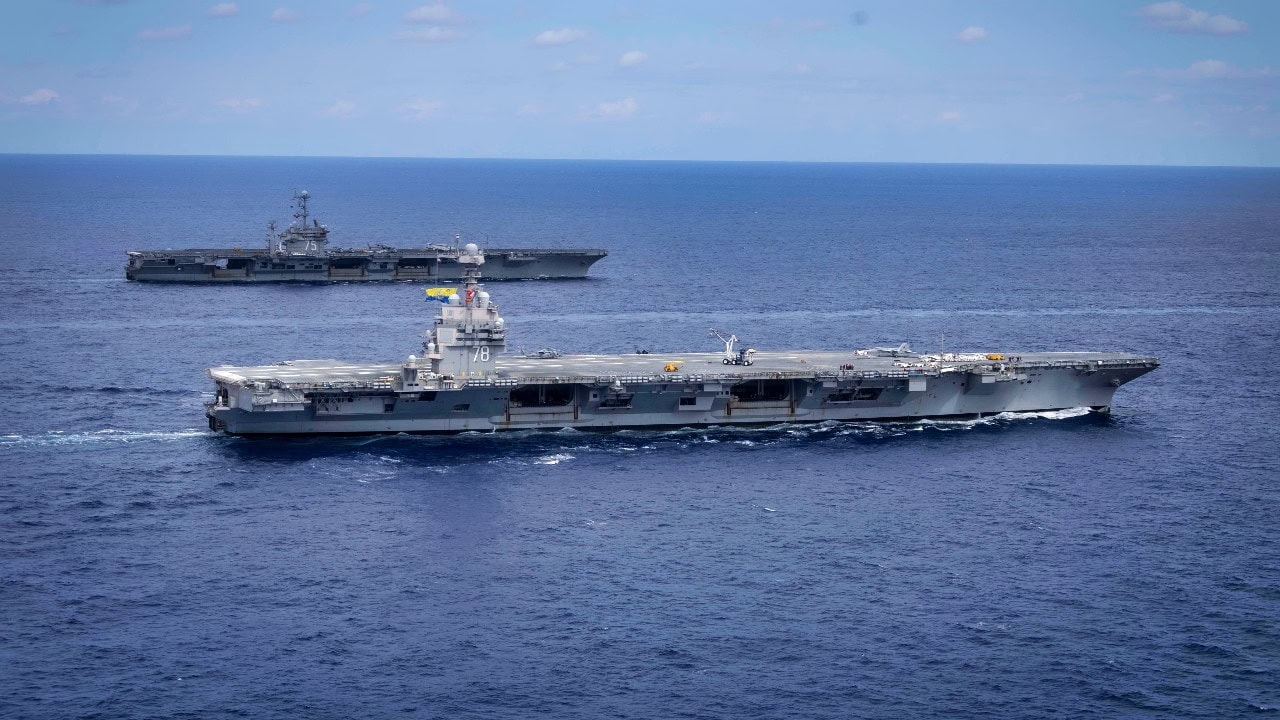
ATLANTIC OCEAN. (Aug. 24, 2024) The Nimitz-class aircraft carriers USS Harry S. Truman (CVN 75), back, and the world’s largest aircraft carrier, USS Gerald R. Ford (CVN 78), sail in formation in the Atlantic Ocean, Aug. 24, 2024. USS Gerald R. Ford is the flagship of the Gerald R. Ford Carrier Strike Group. The aircraft carrier is underway in the Atlantic Ocean to further develop core unit capabilities and skills such as fuels certification and ammunition on-load during its basic phase of the optimized fleet response plan. (U.S. Navy photo by Mass Communication Specialist 2nd Class Maxwell Orlosky).
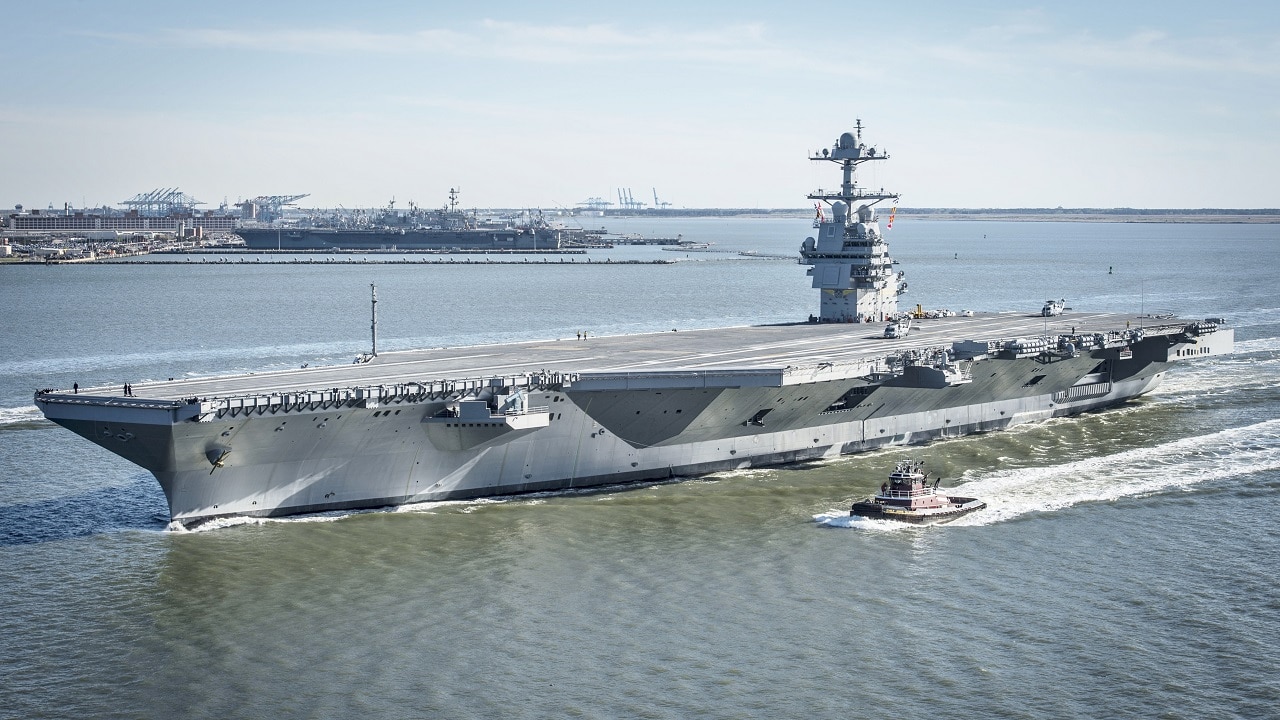
The U.S. Navy aircraft carrier USS Gerald R. Ford (CVN-78) underway under her own power for the first time while leaving Newport News Shipbuilding, Newport News, Virginia (USA), on 8 April 2017. The first-of-class ship – the first new U.S. aircraft carrier design in 40 years – spent several days conducting builder’s sea trials, a comprehensive test of many of the ship’s key systems and technologies. USS George Washington (CVN-73) and the amphibious assault ship USS Kearsarge (LHD-3) are visible in the background.
All three members of this triumvirate are conventionally powered, which means they require more frequent refueling, thus limiting their range, endurance, and mobility compared with their USN counterparts, whose reactors need only a single refueling for a 50-year service life
. Not to mention the Kuznetsov class has a rather spotty reliability record (to put it mildly), at least in Russian hands.
Where to from Here?
Given those limitations of those three carriers, it’s understandable why Xi Jinping and his admirals are salivating at the prospect of finally building a nuclear aircraft carrier.
It would definitely be a force multiplier for Xi’s prospective invasion of Taiwan.
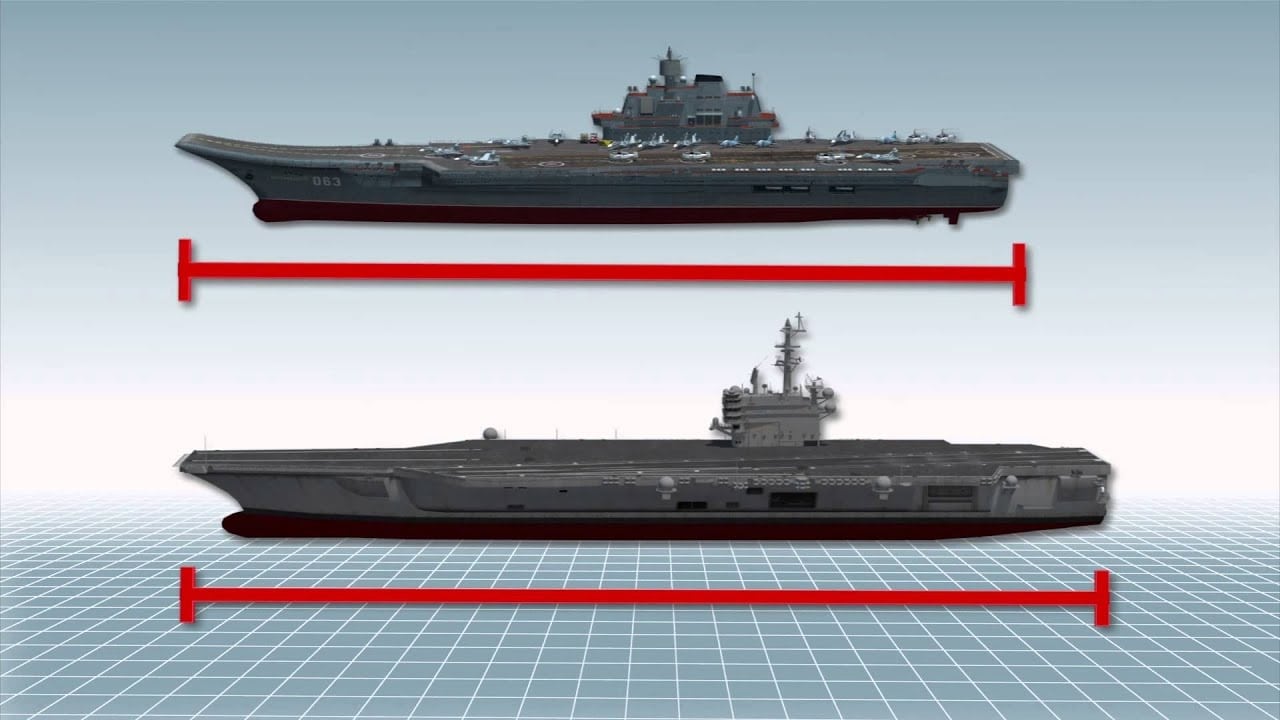
Comparison of U.S. and Chinese Aircraft Carrier sizes. Image Credit: Screenshot.
However, some challenges remain as far as making China’s nuclear supercarrier dream an operational reality.
As the Defense Security Asia website notes, “Developing reliable nuclear propulsion for a supercarrier is an engineering challenge of the highest order, requiring not only technological expertise but also decades of operational experience…The U.S. Navy, with more than 70 years of nuclear carrier operations, holds a deep reservoir of institutional knowledge that China lacks…Carrier air wing integration, complex deck handling procedures, and large-scale joint operations are areas where China is still in the early stages of learning.”
Nonetheless, given China’s alarmingly rapid pace of shipbuilding, the Type 004 could conceivably be operational as soon as the early 2030s. Stay tuned, dear readers.
About the Author: Christian D. Orr, Defense Expert
Christian D. Orr is a Senior Defense Editor. He is a former Air Force Security Forces officer, Federal law enforcement officer, and private military contractor (with assignments worked in Iraq, the United Arab Emirates, Kosovo, Japan, Germany, and the Pentagon). Chris holds a B.A. in International Relations from the University of Southern California (USC) and an M.A. in Intelligence Studies (concentration in Terrorism Studies) from American Military University (AMU). He is also the author of the newly published book “Five Decades of a Fabulous Firearm: Celebrating the 50th Anniversary of the Beretta 92 Pistol Series.”